Location data is verified by analyzing the quality of signals (like GPS, Wi-Fi, or Bluetooth), checking how long a device stays in one place (dwell time), matching the coordinates to known locations (POIs), and scoring the data based on precision, recency, and frequency of pings. This ensures the user was actually present at a specific location with high confidence.
Explaining the Criteria Used by Leading Providers
1. Signal Type
- Measures the source of the location signal: GPS, Wi-Fi, Bluetooth, or cell tower.
- Why it matters: GPS is most precise, while cell towers are much less accurate.
2. Dwell Time
- Calculates how long a user’s device remains in a location.
- Why it matters: Longer dwell times indicate intentional visits, not drive-bys or pass-throughs.
3. POI Matching (Point of Interest)
- Compares coordinates to known physical locations like stores, booths, or event venues.
- Why it matters: Verifies that someone was actually at a meaningful location, not just nearby.
4. Recency
- Evaluates how fresh the location data is — seconds, minutes, or hours ago.
- Why it matters: Real-time data is more relevant for live event targeting and in-the-moment engagement.
5. Frequency
- Measures how often a device emits location signals during a visit.
- Why it matters: High frequency increases confidence that a visit actually occurred.
6. GPS Precision
- Assesses the margin of error (in meters) in a given location ping.
- Why it matters: Higher precision is critical when targeting tight geofences like a specific booth or hotel ballroom.
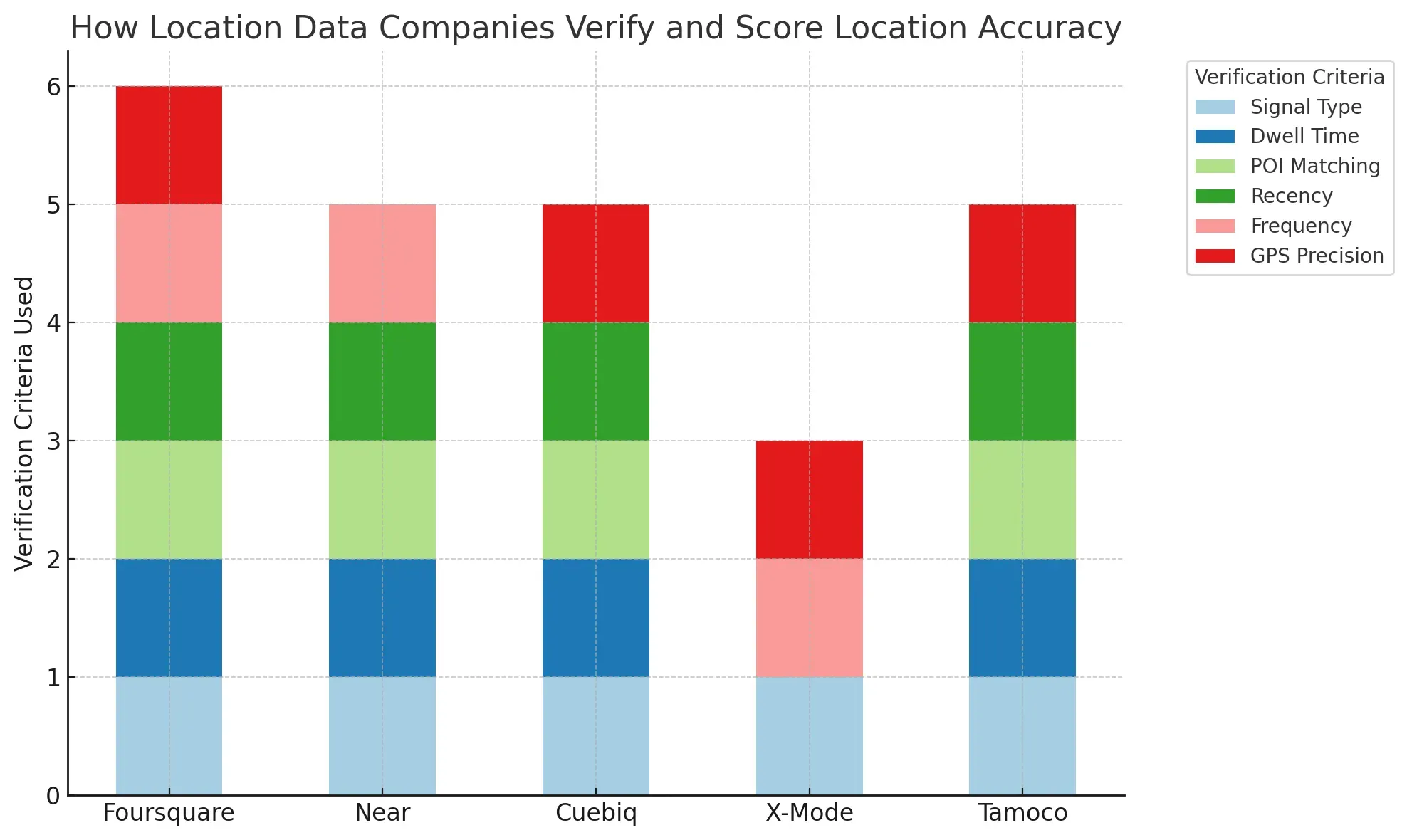
The chart above compares five well-known location intelligence companies—Foursquare, Near, Cuebiq, X-Mode, and Tamoco—across these six key verification criteria. The more methods a company uses, the higher the confidence in the accuracy of their data. For example, Foursquare uses its Pilgrim SDK to combine GPS, Wi-Fi, and motion data, while Cuebiq applies a Location Quality Score (LQS) to every signal it collects. Tamoco emphasizes POI-level accuracy, and X-Mode, now part of Digital Envoy, is known for high-frequency GPS data. Each provider takes a slightly different approach, but the goal is the same: accurate, privacy-compliant location data that marketers can trust.


 geofencing